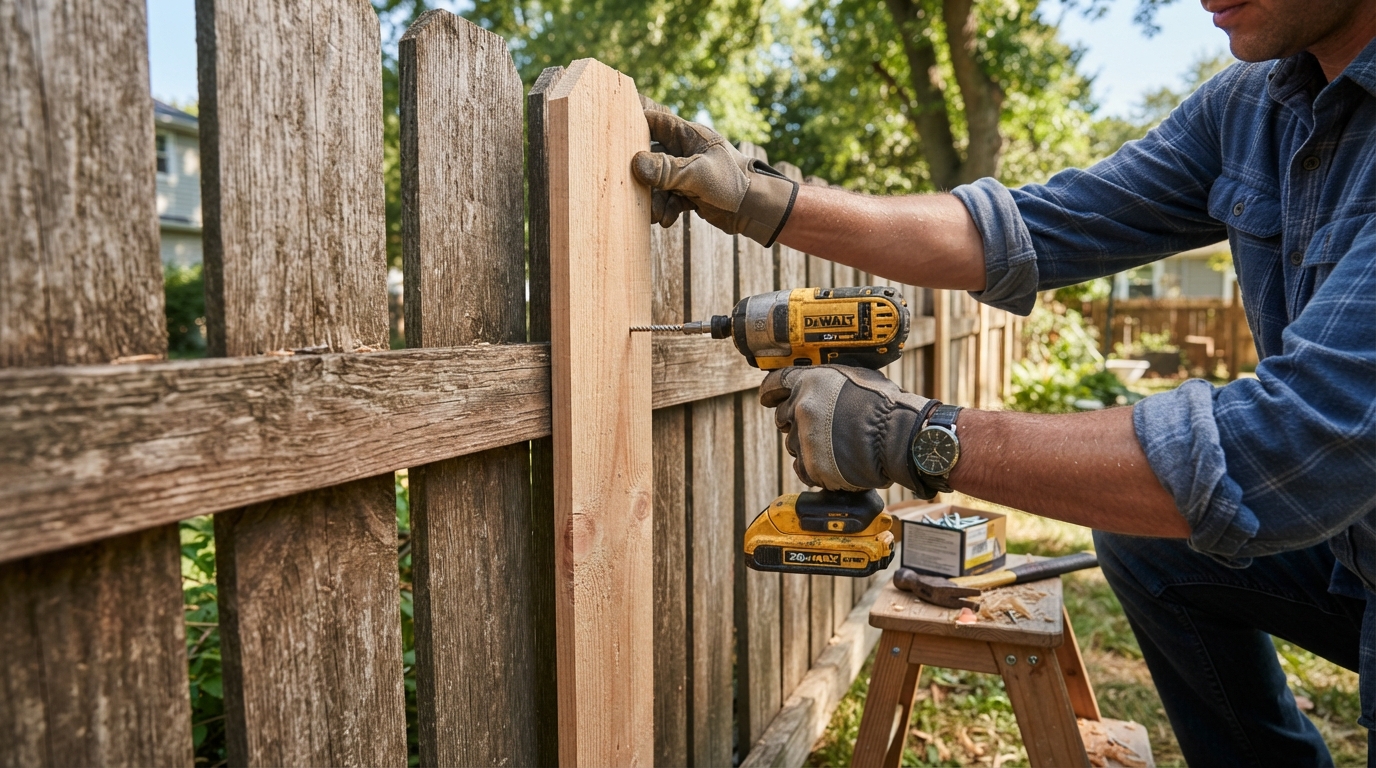
Deciding whether a fence needs a quick fix or a complete overhaul isn’t always obvious at first glance. A few loose boards might seem minor, but they can sometimes signal a larger structural issue hiding beneath the surface. This guide walks through how to evaluate fence damage, what a typical repair process looks like, and how material choice affects long-term durability.
Signs a Fence Needs Repair vs Replacement
Not every fence problem calls for a full replacement, but knowing the difference between a minor fix and a bigger issue can save both time and money. A close inspection usually reveals which category a given problem falls into.
Fences that show isolated damage, such as a single cracked board or one loose post, are typically good candidates for targeted repair. On the other hand, fences with widespread rot, extensive rust, or multiple leaning sections across the property often signal that the underlying structure has weakened beyond simple patchwork. For anyone comparing fence repair, Edmond OK properties frequently deal with wind-related damage that can range from cosmetic to structural depending on severity.
Step-by-Step Repair Process
Understanding the general flow of a repair project helps set realistic expectations for timing and scope. While every situation differs slightly, most repairs follow a similar sequence.
- Initial inspection to identify all areas of damage, not just the most visible ones
- Assessment of whether posts, boards, or hardware need replacement
- Sourcing matching or compatible materials for the repair
- Removal of damaged sections without disturbing surrounding structure
- Installation of new materials, including proper anchoring for posts
- Final check for stability, alignment, and overall appearance
Skipping steps in this sequence, particularly the initial inspection, can lead to overlooked damage that resurfaces shortly after a repair is completed.
When Multiple Sections Are Involved
Larger repair projects involving several damaged sections often benefit from being addressed in phases, especially if budget constraints are a factor. Prioritizing structurally critical areas, such as leaning posts, before addressing cosmetic issues tends to be the more practical approach.
Choosing Materials That Last Locally
Material selection plays a significant role in how well a fence holds up against local weather patterns. Some options handle moisture and temperature swings better than others.
Wood Options
Pressure-treated lumber remains a common choice due to its resistance to rot and insect damage compared to untreated wood. Cedar is another popular option, valued for its natural resistance to decay, though it typically comes at a higher price point than pine.
Metal and Vinyl Alternatives
Vinyl fencing has grown in popularity for its low maintenance requirements and resistance to rot entirely, though it can become brittle in extreme cold. Metal fencing, particularly aluminum, offers strong durability against wind while requiring minimal upkeep beyond occasional cleaning.
Frequently Asked Questions
How can a homeowner tell if fence damage is structural? Structural damage often includes leaning posts, sections that shift when pushed, or visible separation at joints, all of which suggest the issue goes beyond surface-level wear.
Is it possible to repair only part of a fence and leave the rest untouched? Yes, partial repairs are common and often practical when damage is isolated to specific sections rather than spread throughout the entire fence line.
What tools are typically needed for basic fence repairs? Basic repairs often require a post hole digger, level, screws or nails appropriate for the material, and a saw for cutting replacement boards to size.
How does soil type affect fence post stability in this region? Clay-heavy soil, common in parts of Oklahoma, can expand and contract with moisture changes, which sometimes contributes to posts shifting or loosening over time.
Should fence repairs be scheduled before or after severe weather season? Addressing minor issues before storm season arrives can help prevent small problems from becoming larger ones once high winds or heavy rain hit.
Final Thoughts
A methodical approach to fence repair, starting with a thorough inspection and followed by informed material choices, tends to produce results that last far longer than quick, reactive fixes. Recognizing the difference between isolated damage and broader structural concerns helps homeowners make smarter decisions about where to invest repair budgets. With the right planning, a fence can be restored to full function while continuing to complement the overall look of the property for years to come.